ShapeLLM
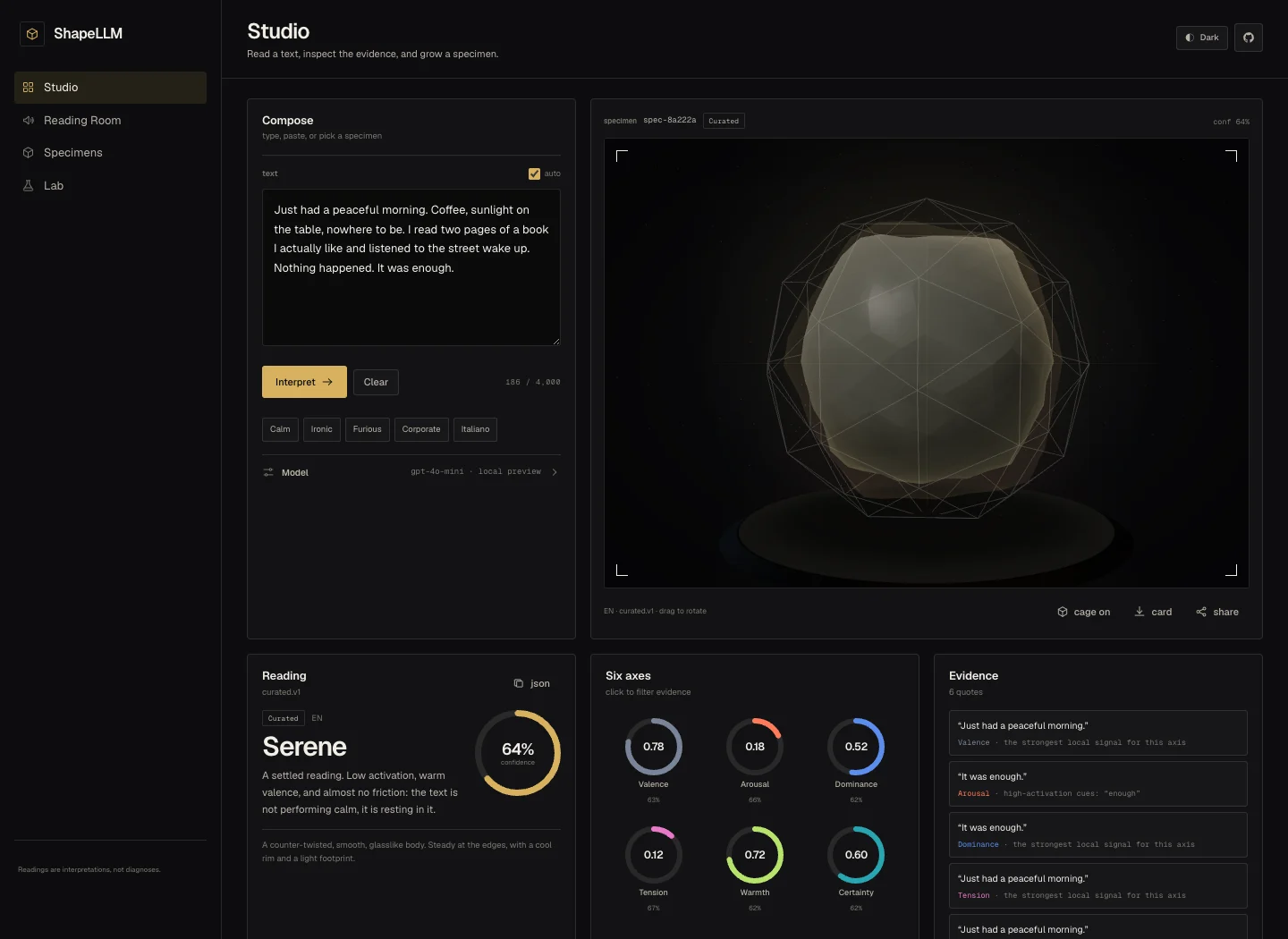
Reads the tone of a text across six dimensions and maps that reading to a 3D form, with source quotes behind the scores.
- Role
Developer
- Year
2026
- Status
Proof of concept
- Stack
Next.js, three.js, zod
Context and constraints
A single anger score leaves much of a text's tone unexplained. ShapeLLM explores a richer reading: valence, arousal, dominance, tension, warmth and certainty. Each score has a confidence value and quoted evidence that the reader can inspect. These readings are interpretations of language, not psychological assessments.
What I built
I built a Studio where text becomes a structured reading and a three.js specimen. Zod validates the model response, and quoted evidence is anchored to the source text. A deterministic mapping turns the six-axis reading into geometry and material parameters: the same reading produces the same form.
The Reading Room extends this to longer texts. It divides a reading into beats, follows their changing tone, and animates the specimen during playback. Browser speech synthesis provides the voice; silent playback keeps the visual sequence usable without audio.
Outcome
A working proof of concept with a specimen gallery and a Lab showing evaluation methods and baseline results. The demo works without an API key through labelled sample readings and a local heuristic fallback. A provider key enables live model readings.
The evaluation set is small and uses a single author's targets without a held-out split. Its results are a baseline for further testing, not evidence that the system measures emotion reliably.
Media
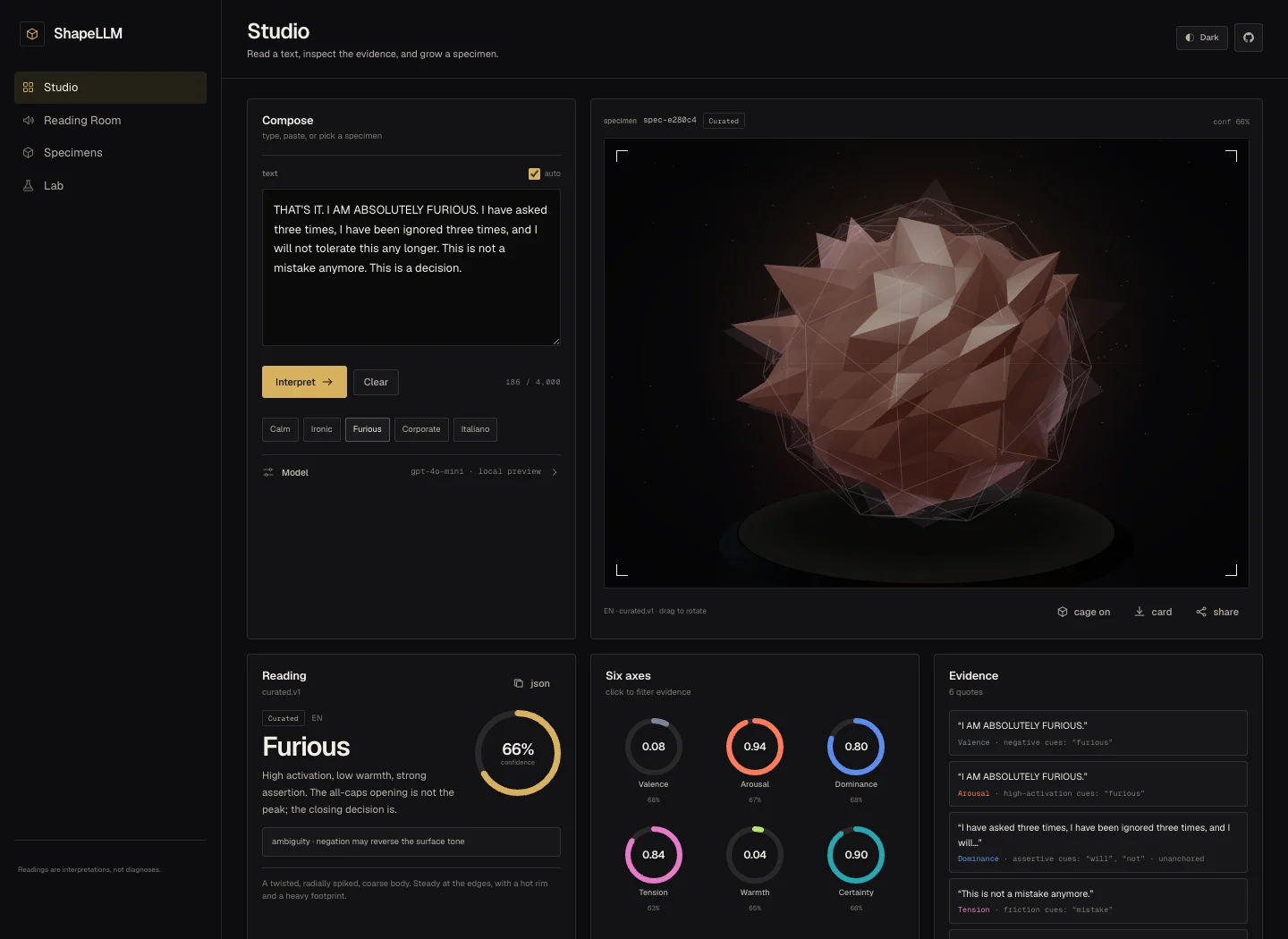
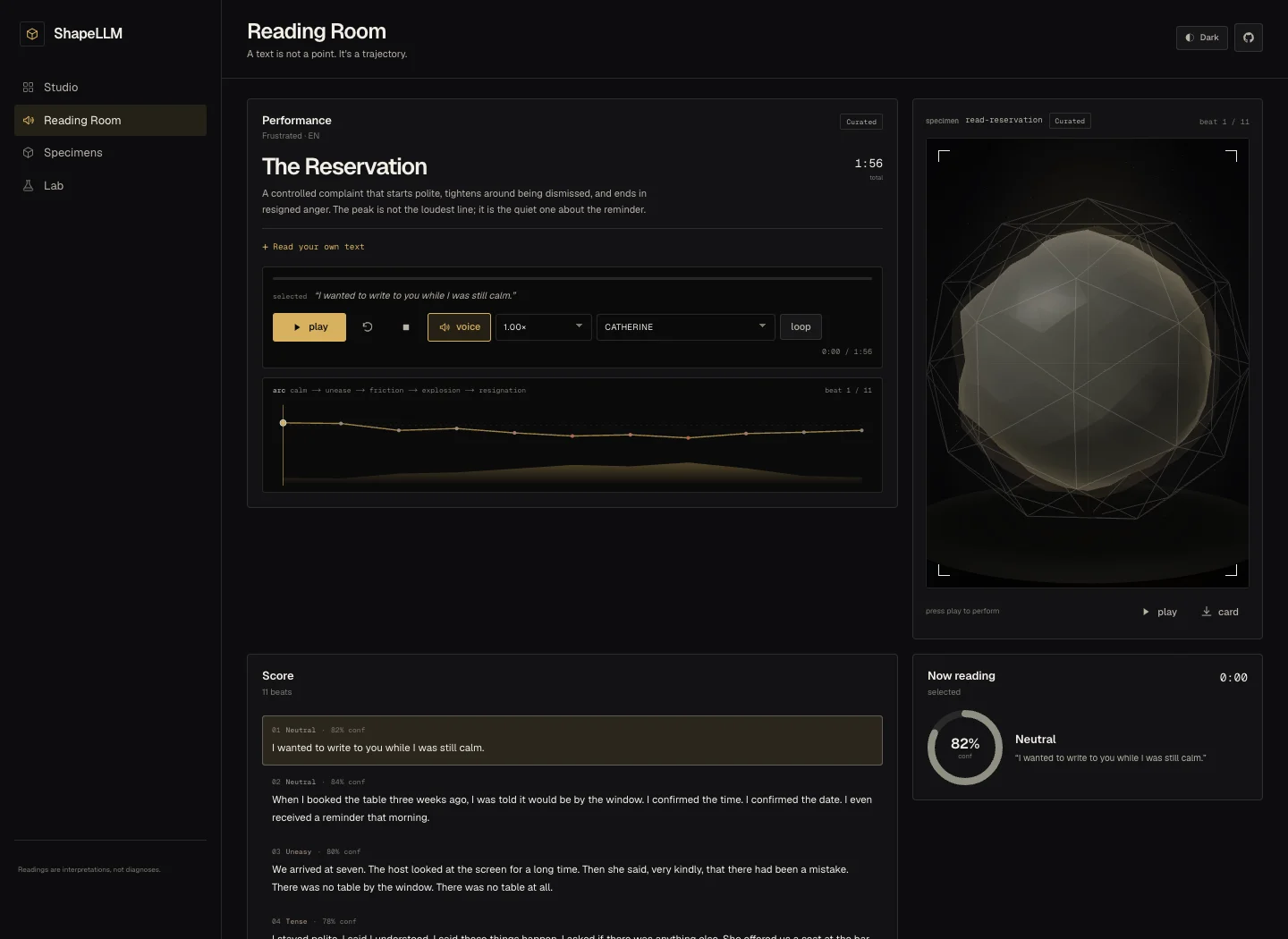
Studio screenshots compare calm and furious samples. The Reading Room shows how a longer text becomes a sequence of changing forms.